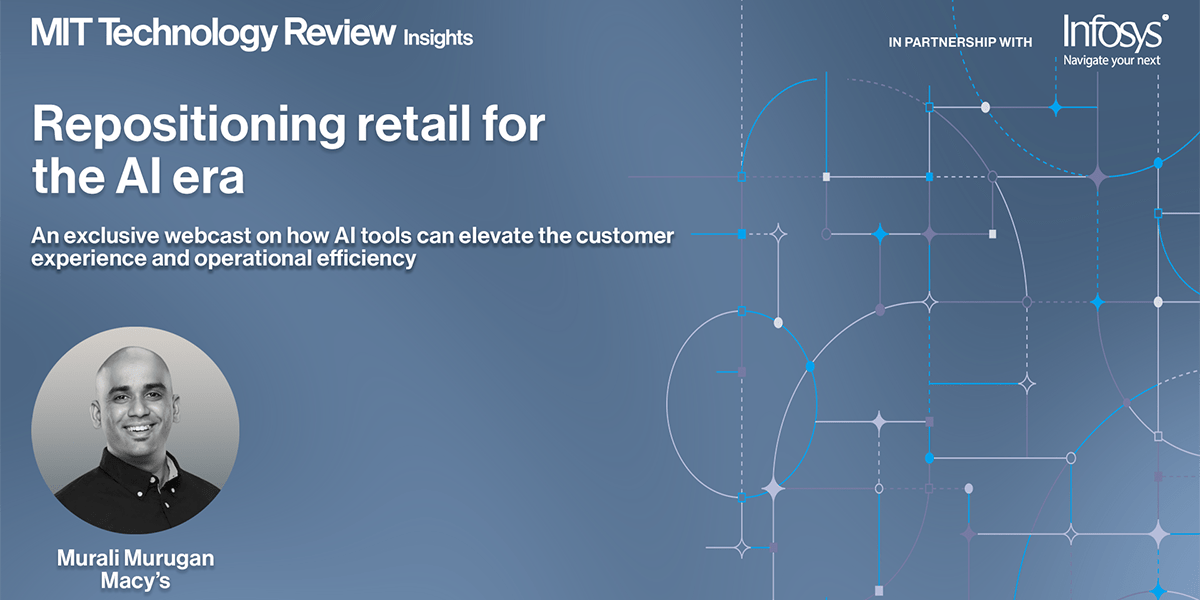
Artificial intelligence is rapidly reshaping retail, but not in ways that consumers might notice right away. The biggest shift may not be flashy virtual experiences or chatbot shopping assistants, but in how decisions are made behind the scenes: how products appear in search results, how inventory moves through supply chains, how engineers dispatch code faster, and how retailers respond to customer behavior in real time. As traditional retailers navigate a fragmented and highly competitive landscape, AI is becoming an operating philosophy.
At Macy’s, this philosophy is often defined by what senior engineering director Murali Murugan describes as an “AI-first” approach. “AI is not about adding intelligence on top,” Murugan says. “It’s about redesigning how decisions are made so that businesses move faster and every experience feels more relevant by default.” Instead of layering AI into existing workflows, Macy’s is embedding the intelligence directly into systems that include personalization, research, operational planning, and software development itself.
The company’s strategy reflects a larger shift happening across retail: a move away from isolated experimental AI systems toward integrated systems designed to compress “the gap between signal and action,” as Murugan puts it. Early efforts focused on narrow, high-impact use cases like search recommendations and customer engagement, where measurable gains in conversion and reduced friction quickly built internal momentum. “Once we identified the quick wins, scaling became a business decision, not a technology discussion anymore,” he says.
That momentum is now extending to conversational commerce through tools like Ask Macy’s, an AI-powered shopping assistant designed to act more like a personal stylist than a traditional search bar. Whether it’s for a concert, vacation, or last-minute event, customers can describe what they need during the conversation and get curated recommendations informed by past purchases, preferences, and context.
However, the company sees AI as merely an invisible layer that enhances human judgment rather than a replacement for it. The long-term vision is for retail that feels more seamless, adaptive and personalized, powered by systems that customers may never even notice exist.
“The real transformation in all of this comes from continuous improvement,” says Murugan. “It’s about learning from mistakes, quickly adapting to newer technology standards that come into effect, timing, and execution, amplifying a measurably better customer experience.”
This webcast is produced in partnership with Infosys.
This content was produced by Insights, the custom content arm of MIT Technology Review. It was not written by the editorial staff of MIT Technology Review. Researched, designed, and written by human writers, editors, analysts, and illustrators. This includes writing surveys and collecting data for surveys. The AI tools that may have been used were limited to secondary productions that passed comprehensive human review.