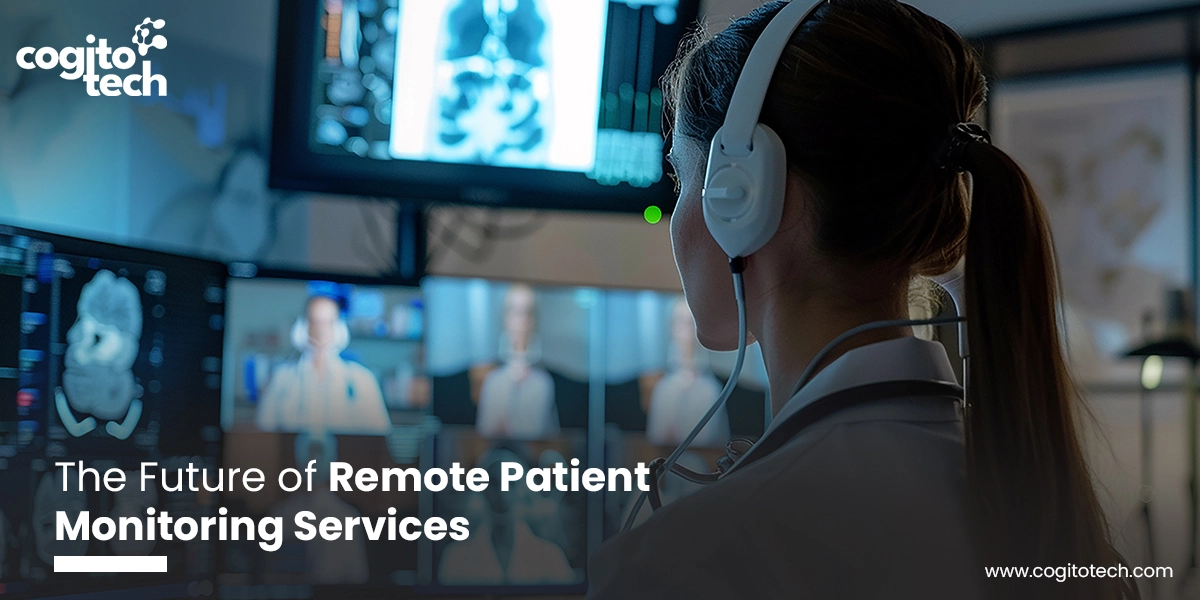
One important area that can help overcome this challenge is the integration of competent care information and patient monitoring models. Virtual monitoring systems, which enable remote patient monitoring through audio and video devices, have enhanced safety, especially for high-risk patients. Human supervision was essential to develop this solution through continuous audio and video (AV) monitoring of the patient within the hospital.
In this blog, we will explore the extent of continuity Remote patient monitoring It leverages real-time video analysis over long periods, requiring AI systems to process data efficiently for proactive care.
Challenges of traditional monitoring methods
Traditional fall detection devices rely on seniors to activate them manually or wear them continuously. In fact, many older adults forget, reject, or are unable to use these devices in times of crisis.
Meanwhile, cameraless sensor systems can miss events when the environment is cluttered, poorly lit, or movement is subtle. This gap has led the industry towards human-centered care intelligence and patient monitoring systems.
Some other shortcomings are
- Gaps between employee rounds can cause early warning signs to be missed.
- Limited visibility in patient rooms, especially at night or during shift changes.
- Human fatigue and workload reduce consistency in observation.
- There are no continuous data to track precise behavioral changes over time.
- There is a reliance on patient-triggered alerts, which may not work properly during times of distress or confusion.
- It can be difficult to discern context, such as whether the sound is innocuous or urgent.
How audio and video signals help detect abnormalities in a patient
Real-time video and audio analysis is needed to address staffing shortages. Remote video patient monitoring enables healthcare providers to monitor patients from a central location, allowing them to track the following patient activities:
- Detecting gait instability through video-based posture and movement tracking can identify signs of imbalance, such as shuffling or slow movements.
- Estimating posture or sudden shifts in body direction, such as leaning, stumbling, or wobbling, as captured in video frames.
- The system can also tell when someone is moving faster or slower, dragging their feet, or stopping suddenly.
- Sounds of distress, such as groans, gasping, or calls for help, are also recorded before a fall.
- For acoustic analysis, acoustic signals and environmental sounds, such as a chair tipping over, an object falling, or a bed rail moving, are also recorded.
- Abnormal lethargy occurs when the patient stops moving for a long time.
- Coughing spells, heavy breathing, or choking sounds indicate medical distress.
- Motion trajectory tracking is used to track a patient’s movements before a fall event occurs.
Monitoring older adults is highly context-dependent. The loud noise may be caused by the caregiver closing the door, not the patient falling. A cough may indicate ordinary discomfort or an initial indication of respiratory deterioration. AI systems are unable to infer these nuances unless they are trained on extensively annotated reference data.
Read also: A guide to real-time monitoring: types, use cases, benefits, and best practices
Bring context to unstructured audio and visual data
Explanation of medical data Audio and video help bring context to raw data. Cogito Tech’s annotation teams carefully examine audio and video feeds, dissecting each clip or live stream from cameras in the home or healthcare facilities into individual events, micro-movements, environmental factors, and interaction patterns that AI models can learn to infer. This includes:
- Frame-by-frame marking: This includes seeing if the patient shifts from a sitting to a standing position, leans unusually, staggers, lowers himself slowly, or suddenly collapses. Subtle changes in posture can be signs of early unsteadiness, fainting spells, medication side effects, or dizziness. AI can only learn these patterns by carefully classifying them.
- Medical audio explanation of clinical significance: Our interpreters classify not only screams or calls for help, but also coughing patterns, wheezing, heavy breathing, sudden silence (in high-risk patients), slurred speech, or distress tones. Medical audio explanation It adds a critical layer of context when furniture, blankets, or poor lighting might obscure visual cues alone.
- Define environmental cue: The surrounding environment has a great impact on the safety of the elderly. We label items like walkers, medication trays, water leaks, rugs, lighting conditions, clutter, sharp edges, and even room layouts. AI models trained in environmental context are much better at predicting risks and preventing falls.
- HIPAA/GDPR Compliant Workflow: Commitment is not viewed as a burden, but rather as an integral part of our company culture. Cogito’s medical annotation process strictly adheres to HIPAA, GDPR and other relevant regional privacy regulations. The company uses secure spaces to tag medical data that requires multiple forms of identification, secure data transmission, session monitoring, and authorized access. Explanations of medical data Obtain the necessary permissions to perform tasks, and every interaction with the data is recorded for tracking purposes. The compliance-first approach ensures that patients’ rights, especially their rights to privacy, consent and data protection, are fully respected by international standards, both legally and ethically.
- Privacy and ethics at the core: Working with patients’ sensitive audio-visual footage, especially in healthcare, requires much more than just technical proficiency. It requires moral judgment, emotional sensitivity, and a commitment to protecting the dignity and autonomy of each individual represented in the data.
- Continuous verification: The goal is to ensure that bloggers never view the subject as a “patient” with an identity but as reference data intended to enhance the performance of the model through iterative feedback loops and human supervision in the loop. We train our team of reviewers on compliance standards, ethical labeling, and confidentiality agreements. This promise protects patients’ rights and makes the AI systems that use these data sets more trustworthy and transparent.
conclusion
Achieving scalability, transparency, and adaptability in care intelligence and patient monitoring systems presents significant challenges. This includes efficiently processing video data at higher frame rates, ensuring compliance with privacy regulations, and adapting to dynamic hospital settings with different lighting conditions, camera angles, and patient behaviors.
To address these concerns, annotated audio-visual data from the partnership is crucial. This data is generated by working with data classification experts and healthcare providers to develop computer vision-based insights into how patients behave, move and interact with healthcare staff.
in Cogito TechWe provide real-time monitoring, including locating people and furniture, estimating poses, and calculating motion scores. We are rigorously evaluating the model’s performance in live hospital settings, demonstrating its ability to provide care information and monitor patients with accurate data and lay the foundation for the future. AI-powered remote monitoring solutions.