AI Tools for Predicting Stock Market Trends: Revolutionizing Finance in the Digital Age
The stock market, with its intricate web of variables and unpredictable fluctuations, has long been a domain where human expertise and intuition reign. However, the advent of artificial intelligence (AI) is reshaping this landscape, offering tools that can analyze vast datasets, identify patterns, and even predict trends with increasing accuracy. As AI continues to evolve, its role in financial markets is becoming both a powerful asset and a subject of debate. This article explores how AI tools are used to forecast stock market trends, their benefits, challenges, and the future of this transformative technology.
How AI Tools Predict Stock Market Trends
AI leverages advanced algorithms and machine learning (ML) techniques to process and analyze complex financial data. These tools can sift through historical stock prices, economic indicators, company earnings reports, and even real-time news or social media sentiment to identify patterns that might elude human analysts.
Key techniques include:
-
Machine Learning Models: Algorithms like neural networks (particularly Recurrent Neural Networks or RNNs, and Long Short-Term Memory networks) are adept at analyzing time-series data, such as stock price movements. Other methods, like Support Vector Machines (SVMs) and Random Forests, help classify market trends based on historical data.
-
Natural Language Processing (NLP): AI can parse news articles, earnings calls, and social media to gauge market sentiment. For example, tools like Bloomberg’s AI-driven platforms analyze headlines to detect shifts in investor confidence.
- Big Data Analytics: By integrating structured data (e.g., financial statements) and unstructured data (e.g., social media posts), AI tools uncover correlations and insights that traditional methods might miss.
Benefits of AI in Stock Prediction
-
Speed and Efficiency: AI processes data at lightning speed, enabling real-time analysis and rapid decision-making. This is crucial in high-frequency trading, where milliseconds can determine profitability.
-
Pattern Recognition: Machine learning models can detect complex patterns in data, such as seasonal trends or correlations between global events and market shifts.
-
Risk Management: AI can simulate various market scenarios, helping investors assess risks and optimize portfolios. For instance, robo-advisors like Betterment use AI to tailor investment strategies to individual risk profiles.
- Sentiment Analysis: By evaluating news and social media, AI tools like AlphaSense or Socialbakers provide insights into market sentiment, which can influence stock prices.
Challenges and Limitations
Despite its promise, AI in stock prediction is not without hurdles:
-
Overfitting: Models trained on historical data may perform poorly in new, unforeseen market conditions. For example, the 2020 market crash due to the pandemic exposed gaps in models relying on pre-pandemic data.
-
Unpredictable Events: Geopolitical crises, regulatory changes, or black-swan events (e.g., the 2008 financial crisis) are hard to quantify, limiting AI’s predictive accuracy.
-
Ethical and Regulatory Concerns: The opacity of "black-box" algorithms raises questions about accountability. Additionally, the potential for AI-driven market manipulation or exacerbating inequality—through unequal access to advanced tools—remains a concern.
- Data Quality: AI systems are only as good as the data they receive. Biased or incomplete datasets can lead to flawed predictions.
Examples of AI Tools in Finance
Several platforms and firms have integrated AI into their financial strategies:
- QuantConnect: A platform enabling developers to build and backtest algorithmic trading strategies using AI.
- Sentieo: Combines AI with financial data to help analysts uncover insights from unstructured data.
- Renaissance Technologies: A hedge fund renowned for its quant-driven approach, utilizing AI to identify inefficiencies in markets.
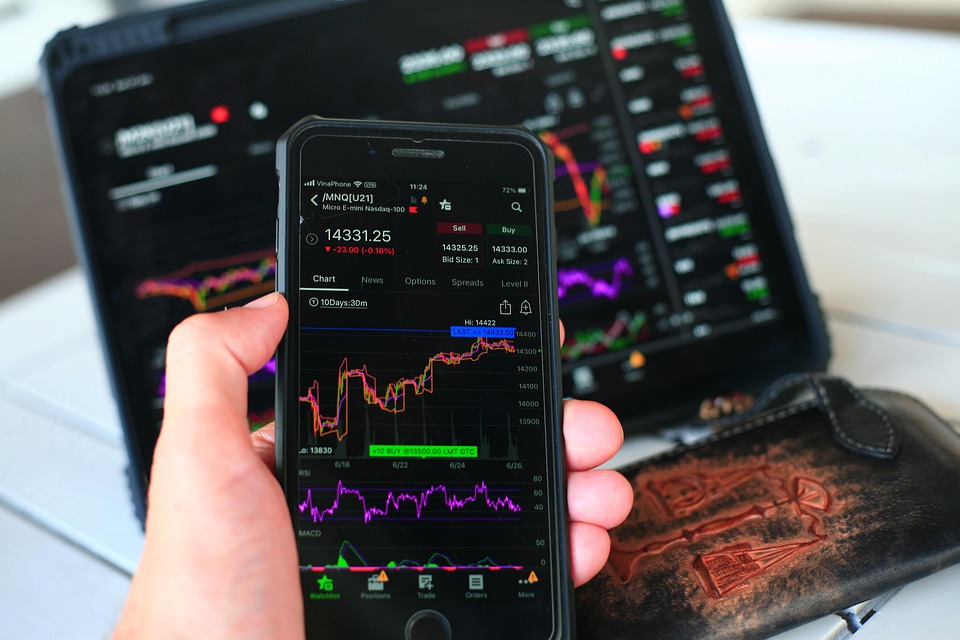
- TradingView: Offers AI-powered charting tools and indicators for retail investors.
The Role of Human Oversight
While AI excels at data analysis, human judgment remains critical. Traders and analysts must interpret AI-generated insights, factoring in contextual knowledge and ethical considerations. For instance, an AI model might flag a stock for purchase based on historical trends, but a human analyst might recognize an impending regulatory change that could impact the stock.
The Future of AI in Finance
Emerging technologies like quantum computing and enhanced NLP could further revolutionize AI’s capabilities. Additionally, the rise of decentralized finance (DeFi) and blockchain may create new opportunities for AI-driven market analysis. However, the future will depend on addressing current limitations, such as improving model transparency and ensuring equitable access to AI tools.
Conclusion
AI tools are undeniably transforming stock market analysis, offering unprecedented speed, depth, and efficiency. Yet, they are not a panacea. Their success hinges on careful implementation, continuous refinement, and the integration of human expertise. As the financial landscape evolves, AI will likely remain a valuable ally for investors, but one that requires caution, critical thinking, and ethical oversight. In the end, the most effective strategies will probably blend the strengths of artificial intelligence with the irreplaceable insights of human judgment.